
Sweeps & Ladders Chimney Repair In Franklin, TN: Reach Out To Our Experts
Franklin, TN is a community that values heritage, craftsmanship, and the warmth of a well maintained home. At Sweeps and Ladders, we help preserve that local charm by providing expert chimney repair services designed to keep your fireplace functioning as efficiently as possible. Whether you are living in a historic property near Downtown Franklin or a modern estate in Cool Springs, our team brings years of specialized experience to every masonry project. We understand that a chimney is more than just a stack of bricks; it is a vital ventilation system that requires precise care to protect your household. From fixing cracked crowns to restoring structural integrity after years of weathering, we are the professionals you can trust to get the job done right.
What Early Warning Signs Show That a Leaning or Cracking Chimney Is at Risk of Partial Collapse?
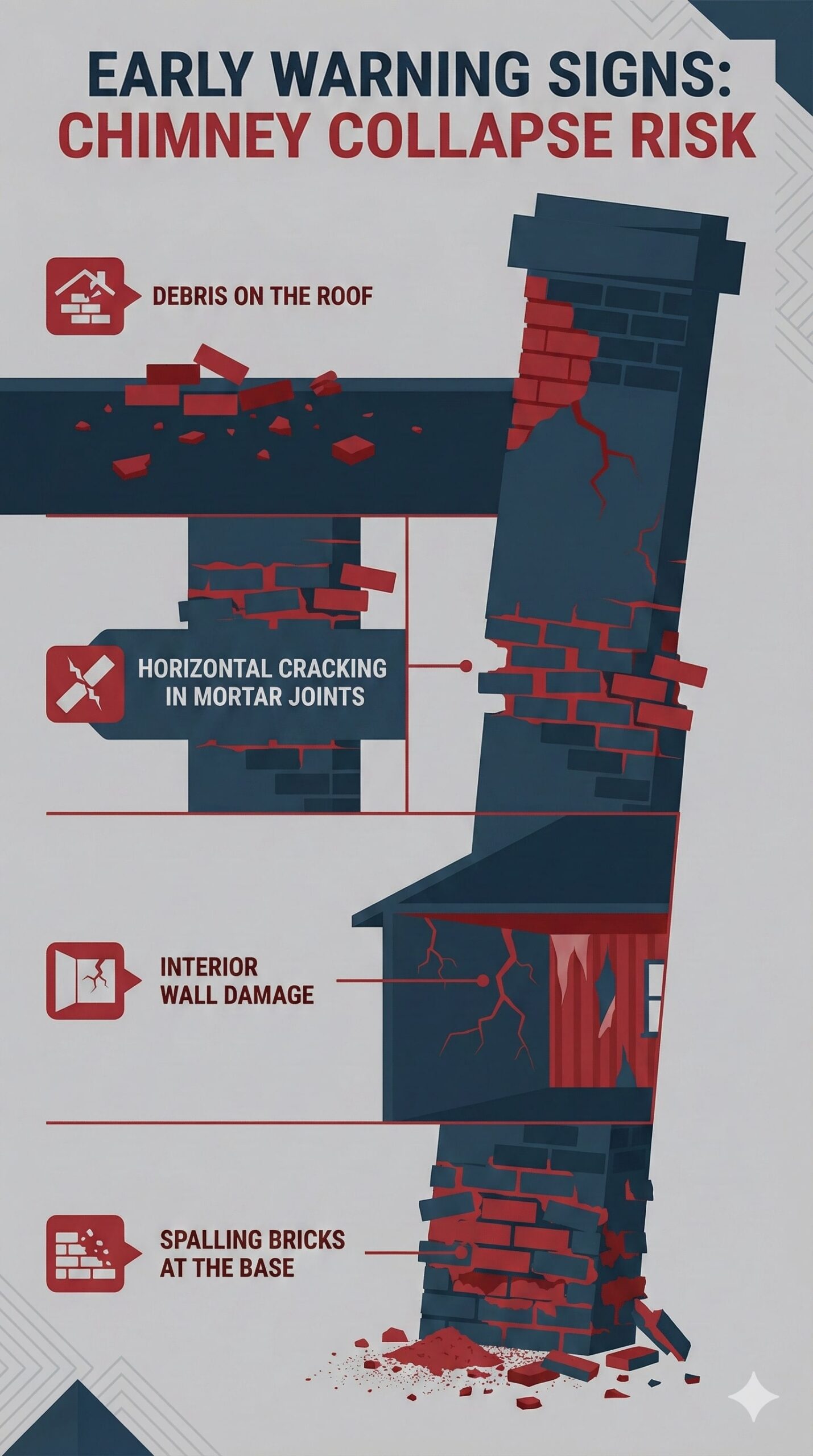
A leaning or cracking chimney is one of the most serious structural issues a homeowner can face, and identifying the warning signs early is essential for preventing a total or partial collapse. While some settling is common in older Franklin homes, certain indicators suggest that the masonry is no longer structurally sound. If you notice a visible gap between the chimney stack and the exterior siding of your house, this is a primary red flag. This gap often starts small but can widen quickly as the chimney pulls away from the home’s frame.
Other critical warning signs include:
- Horizontal Cracking in Mortar Joints: Unlike small vertical hairline cracks that might occur from minor settling, horizontal cracks often indicate that the chimney is shifting or that the foundation beneath it is failing.
- Spalling Bricks at the Base: When the bricks at the bottom of the stack begin to flake, peel, or crumble, the “footing” of the chimney loses its ability to support the immense weight of the masonry above.
- Interior Wall Damage: If you see new cracks in the drywall or wallpaper near the fireplace inside your home, it may be because the chimney is tilting and putting pressure on the internal structure of the house.
- Debris on the Roof: Finding chunks of brick or large pieces of mortar on your roof or in your gutters is a sign that the upper portions of the chimney are disintegrating and could fall.
At Sweeps and Ladders, we emphasize that a leaning chimney will not “fix itself” or stabilize on its own. The weight of the masonry creates a leverage effect; the further it leans, the faster the structural decline happens. We utilize professional stabilization techniques and foundation repairs to address these issues before they lead to property damage or injury. Ignoring these signs can lead to a sudden collapse, especially during high winds or heavy ice storms which are not uncommon in Middle Tennessee.
Your Franklin, TN Chimney Company: We Are Proud To Serve This Historic Community
Franklin, TN is widely regarded as one of the most beautiful and historic towns in the United States. From the bustling shops and restaurants along Main Street to the sprawling battlefields that tell the story of the American Civil War, there is a deep sense of pride in the preservation of this area. As a local business, Sweeps and Ladders is honored to serve the homeowners who make this community so vibrant.
Residents and visitors alike enjoy spending time at Pinkerton Park or taking in the scenic beauty of Harlinsdale Farm. The community’s commitment to maintaining the architectural integrity of its historic districts is something we deeply respect. We often work on chimneys that have stood for nearly a century, requiring a delicate touch and specialized masonry skills to match historic mortar and brickwork. Whether you are enjoying a weekend at the Pilgrimage Music & Cultural Festival or exploring the local boutiques, you know that Franklin is a place where quality matters. We bring that same commitment to quality to every chimney repair and fireplace restoration we perform in the area.
Does Freeze/Thaw Weathering Accelerate Deterioration in Colder Climates? How Can Waterproofing Slow It Down?
In Middle Tennessee, we experience a specific type of climate that is particularly harsh on masonry. While our winters may not be as long as those in the north, we go through frequent cycles where temperatures drop below freezing at night and rise above it during the day. This is known as the freeze-thaw cycle, and it is the primary enemy of brick and mortar chimneys.
Bricks are naturally porous, meaning they act like a sponge. When it rains in Franklin, the masonry absorbs moisture. If the temperature then drops, that trapped water freezes and expands by about 9%. This expansion creates internal pressure that microscopic cracks in the brick cannot handle. Over time, this process repeats hundreds of times, leading to several types of damage:
- Spalling: This occurs when the face of the brick literally pops off, leaving the interior of the brick exposed to even more water.
- Mortar Erosion: The mortar joints are softer than the bricks and often fail first, turning into a sandy powder that washes away and leaves the bricks unsupported.
- Internal Shifting: As the structure weakens from the inside out, the entire chimney can become unstable.
To combat this, our company offers professional-grade waterproofing treatments. Unlike store-bought sealants that can trap moisture inside the brick (which actually makes the damage worse), we use vapor-permeable water repellents. These products are specially formulated to block liquid water from entering the brick while allowing water vapor to escape from the inside. This “breathable” barrier is essential for the longevity of your chimney. By applying these treatments after we perform necessary repairs, we can significantly slow down the deterioration process and help your chimney last for decades longer than an untreated one.
Are Old, Unlined Chimneys More Prone To Hidden Interior Decay Even When the Exterior Bricks Look Strong?
Many historic homes in Franklin were built before modern building codes required chimney liners. While a solid brick chimney might look impressive from the street, the interior can be a completely different story. An unlined chimney is significantly more prone to hidden decay because the combustion byproducts, such as carbon monoxide, acidic condensation, and creosote, come into direct contact with the masonry.
The primary issue with unlined flues is that the acidic gases produced by wood or gas fires eat away at the mortar joints on the inside of the chimney. This creates “stair-step” gaps between the bricks that you cannot see from the outside. These gaps allow heat to transfer to the wooden framing of your house, which can lead to a structure fire through a process called pyrolysis. Furthermore, as the internal mortar disappears, the chimney loses its structural “skeleton,” making it much more likely to collapse during a minor earthquake or heavy storm.
Even if your chimney has an old clay tile liner, these are prone to cracking and “slabbing” over time. When a tile cracks, it creates a pathway for heat and toxic gases to reach the outer masonry and the interior of your home. We often find that exterior bricks look nearly perfect while the interior is a crumbling mess of loose debris and soot. Our team uses high-definition chimney cameras to inspect these hidden areas. If we find that your chimney is unlined or that the liner has failed, we can install a high-quality stainless steel liner. This provides a smoother surface for smoke to exit as efficiently as possible and creates a permanent barrier between the fire and your home’s structure.
Can a Chimney’s Draft Be Affected By Nearby Construction or Changes in the Landscape Years After the House Was Built?
It is a common misconception that if a chimney drafted well when the house was built, it will always draft well. In reality, the “stack effect” that allows a chimney to function is highly dependent on the environment surrounding the home. We frequently see homeowners in the Franklin area who suddenly experience smoke backup or poor fires after years of perfect performance, and the culprit is often found outside the chimney itself.
There are several external factors that can change the pressure zones around your home:
- Tree Growth: A tree that was a small sapling twenty years ago may now be a massive oak towering over your roof. If a tree is close to the chimney, it can create wind turbulence or a “blanketing” effect that prevents smoke from rising freely.
- New Rooflines or Additions: If you or a neighbor builds a second-story addition or a taller roofline, it can change the way wind moves across your chimney. This can create a high-pressure zone that literally pushes smoke back down the flue.
- Home Weatherization: If you have recently installed new, energy-efficient windows or added heavy insulation, your home may become “too tight.” A fireplace needs a certain amount of air to “breathe.” If the house is air-tight, the chimney may struggle to pull air up, resulting in a sluggish or smoky fire.
When we encounter drafting issues, we don’t just look at the fireplace; we look at the whole house. Sometimes the solution is as simple as adding a specialized chimney cap designed to increase draft, or it may require extending the height of the chimney to get it above the “turbulent zone” created by nearby obstacles. Our goal is to ensure your fireplace operates as safely and as comfortably as possible, regardless of how the landscape has changed over the years.
What Happens If You Light a Fire When the Flue Is Still Damp After Heavy Rain? Or a Very Cold Flue?
The physics of a chimney relies on the difference in temperature between the air inside the flue and the air outside. If you attempt to start a fire when the flue is damp or excessively cold, you are likely to encounter significant performance issues that can be frustrating and potentially hazardous.
When a flue is damp (perhaps because of a missing chimney cap or a recent Franklin downpour), the moisture acts as a heat sink. The energy from your kindling is wasted trying to evaporate the water in the flue rather than heating up the air to create a draft. This lead to a “heavy” column of air that prevents smoke from rising. Furthermore, lighting a fire in a damp flue creates an environment where acidic soot and water vapor mix, forming a slurry that can damage the mortar and lead to the rapid accumulation of creosote.
Similarly, a very cold flue contains a plug of heavy, dense air. When you open the damper and light a fire, that cold air acts like a lid. The smoke has nowhere to go but out into your living room. To avoid this, we recommend “priming” the flue. This involves holding a rolled-up, lit newspaper near the open damper for a minute or two to warm the air inside the chimney before lighting the main fire.
If you find that your chimney is consistently damp, it is a sign that your chimney cap or flashing is failing. Moisture is the number one cause of chimney repair needs in Tennessee. By keeping the system dry and properly insulated, we help ensure that you can enjoy a fire without the house filling with smoke or the masonry suffering from unnecessary water damage.
Contact Sweeps & Ladders for Your Franklin Chimney Repairs Today
Don’t wait until a small crack becomes a major structural failure. At Sweeps and Ladders, we are dedicated to providing the residents of Franklin, TN with the highest level of chimney care and masonry expertise. From minor mortar touch-ups to full chimney rebuilds and waterproofing, our team is ready to help make your home a safer and more comfortable place with quality chimney repairs near you. We pride ourselves on our transparent communication, our respect for your property, and our deep knowledge of local building needs.